
Digital Innovations

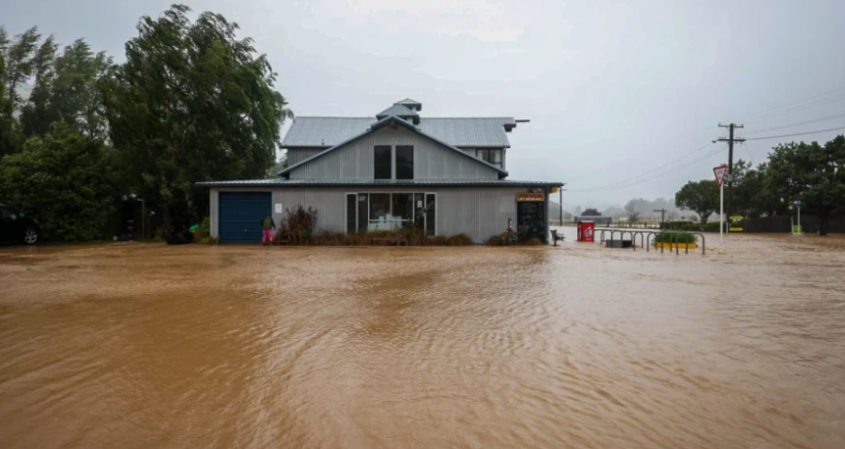
Flooding is one of the most damaging natural hazards in New Zealand, and its impacts are expected to intensify with climate change. Understanding how catchments respond to a wide range of storm events is essential for effective stormwater planning, yet traditional hydraulic models can be slow and computationally demanding. This limits their use for ensemble scenario testing and real time flood forecasting.
Recent research in the Wairewa catchment in Canterbury explored a hybrid approach that combines hydraulic modelling with machine learning to overcome these constraints. The study was part of Andrea Pozo Estivariz's PhD research, which was part of a wider research programme funded by the Ministry of Business, Innovation, and Employment and led by Earth Sciences New Zealand, called "Mā te haumaru ō ngā puna wai ō Rākaihautū ka ora mō ake tonu: Increasing flood resilience across Aotearoa."
Using a Monte Carlo approach, a large catalogue of realistic storm events was generated. Outputs from the BG-Flood hydraulic model were then used to train a machine learning model, developing a hybrid model capable of predicting flood extent and inundation depth across the catchment.
The results show that the hybrid model can produce accurate flood predictions in under a second, offering an efficient and robust way to rapidly assess many possible flood scenarios. This enables faster identification of high hazard areas, better understanding of catchment sensitivity and more targeted use of detailed physics based modelling.
As interest grows in integrating such approaches with rainfall forecasting systems, hybrid modelling offers strong potential to support stormwater planning, emergency response and early warning applications.
Find out more about the research in the paper below, which was presented at the Stormwater Conference & Expo 2026. If you'd like further information about hybrid machine learning modelling, feel free to contact Andrea at andrea.pozoestivariz@awa.kiwi.
(Image credit: Andrea Pozo Estivariz)

Matthew Wilson, University of Canterbury
Cyprien Bosserelle, Earth Sciences New Zealand
Marwan Katurji, University of Canterbury
Fernando Mendez, Universidad de Cantabria, Santander, Spain
Emily Lane, Earth Sciences New Zealand

